The Growing Opportunity in Aquaculture
Other
Aquaculture, is the controlled cultivation, breeding, rearing and harvesting of aquatic organisms. This includes fish, shellfish, crustaceans, mollusks, algae and aquatic plants in all types of water environments. As wild fish stocks are sometimes scarce and not a reliable source of food, aquaculture has become the fastest-growing sector in agriculture. It currently supplies more than 50% of all seafood consumed.
Prefer a printable version? Download the Aquaculture information sheet.
Why is aquaculture worth considering?
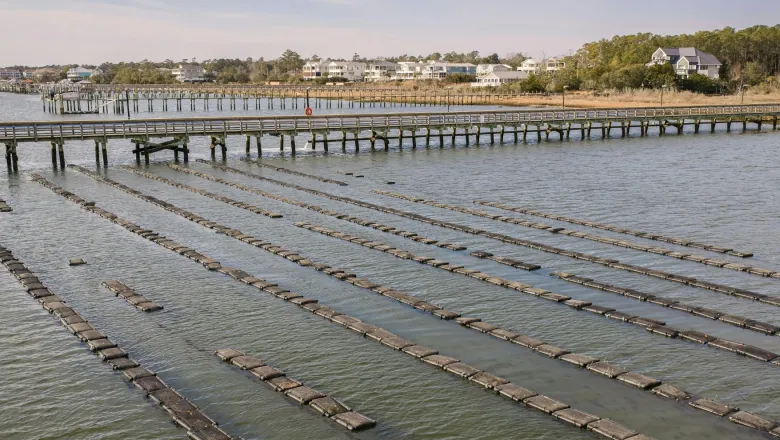
Virginia’s aquaculture industry generates $81 million in farm-gate sales, driven by a 52% growth in the shellfish market. Hard clams remain the backbone ($52 million), while Eastern oysters ($29 million) are the primary growth engine. Virginia is the #1 producer of hard clams and Eastern oysters in the United States.
West Virginia's aquaculture is dominated by the trout sector, which generates millions in annual sales across food-size production, stockers and recreational fee-fishing. Although landlocked, West Virginia has abundant cold-water mountain streams making it especially suitable for raising trout.
State-wide prices generally hover between $3.50 and $6.20 per pound for live-haul and stocking, generating over $100 Million in direct annual sales.
Maryland's aquaculture industry, dominated by oyster farming, has reached record-breaking economic highs, with the 2023 estimated value hitting nearly $15 million across 85 farms and over 81,000 bushels of oysters. Production continues to scale up, driven by steady demand, optimized farming techniques and sustained interest from both the wholesale and half-shell retail markets.
What are examples of equipment used in aquaculture?
Various types of equipment are required for the overall operation of an aquaculture facility. Water testing equipment for pH, nitrites, ammonia and dissolved oxygen is essential for proper water quality management. Treatment chemicals for maintaining water quality include lime, bicarbonate, gypsum, calcium chloride and permanganate. Small-scale producers can often use inexpensive test kits developed for aquariums. Larger operations, particularly reuse or recirculation systems, require more sophisticated testing equipment. Other necessary items include aeration devices, nets for harvest, a scale, feeding equipment, protective netting and processing equipment.
What is the end use of aquatic life?
Farming aquatic life serves several economic, industrial and environmental purposes:
- Food production- Meeting the protein needs of a growing population with resource efficient production methods.
- Niche market opportunities- Producing aquatic seafood for restaurants on a consistent basis in areas not normally available to fresh seafood.
- Habitat Restoration- Rebuilding ecosystems such as creating new artificial oyster reefs to grow oysters and filter costal waterways
- Stock Enhancement- Hatcheries raising threatened fish or shellfish and releasing them into natural habitats to replenish wild populations.
What are some aquaculture best management practices?
Business Planning
- It is essential to develop a business and management plan for the business. This is equally true for both new ventures and existing businesses. The process of developing a thorough business plan requires careful consideration of all aspects of the business, including production, marketing and capital. Preparation of financial statements is crucial, and it is best to be conservative when projecting yields and revenues. There are various tools available to guide and assist with the development of business plans. The business plan should be regarded as a living document and should be revisited at least once per year to assess business performance and make any adjustments to the plan.
- Visit our Farm Management webpage for business planning resources.
Site Selection
- Proper site selection takes into account environmental resources as well as access to industrial infrastructure such as roads, airports and reliable electrical power. Environmental parameters focus on water resources (typically surface water or groundwater) to supply aquaculture operations as well as water discharge. Surface water and groundwater sources for incoming water should be analyzed for water quality and for chemistry parameters appropriate for the culture species. Sampling should be conducted periodically over a year’s time to evaluate seasonal fluctuations that can affect both quality and quantity. Historical data should be obtained going further back in time to determine impacts from droughts.