The Growing Opportunity in Ornamental Flowers
Other
Diversifying your income or choosing to grow various non-food agricultural ornamentals and products can be viable business ventures.
Woody ornamentals can be low-maintenance options for making a profit with garden plant production. These options are popular amongst homeowners or landscapers who might be interested in creating attractive outdoor spaces either at the residential or commercial levels. Ornamentals are also oftentimes sold at the wholesale level- to a local nursery or landscaping company. Woody ornamentals are more tolerant to dry conditions than herbaceous perennials and other flowering species. Varieties can be grown with relatively little maintenance and can be grown outdoors year-round with minimal care.
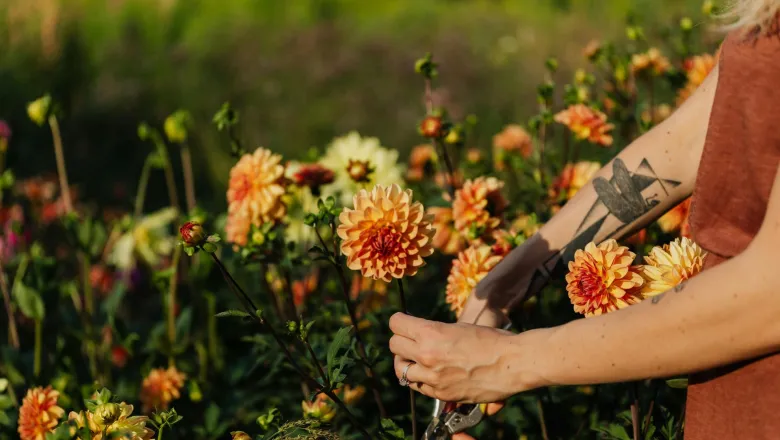
Like woody ornamentals, selling cut flowers is becoming increasingly popular amongst small- and medium-scale mixed organic production farms. Cut flowers are a value-added specialty crop that can be managed like many other row crops while generating increased income per acre compared to most vegetables. Cut flower varieties are selected based on stem length, vase life, and sensory attributes like color and smell. Many growers choose to cultivate over 100 varieties so it’s important to optimize growing conditions and sources of material to support a healthy crop. Growing, processing, and marketing cut flowers can be a labor-intensive undertaking.
Why Ornamental Flowers Are Worth Growing
The basic equipment needed to start producing cut flowers is very similar to that needed by a small direct-market vegetable grower. Small equipment such as rototillers, a low horsepower tractor, and irrigation equipment are typically the only major purchases outside of growing materials that you will need.
Specialty cut flowers are one of the most profitable field crops you can grow with an estimated value of $25,000 to $35,000 per acre for field-grown cuts. The most basic requirements are at least half an acre of open, arable land, a rototiller, and, of course, time and effort.
Trends Shaping the Ornamental Industry
Bedding plant and nursery stock sales in Virginia are projected to be greater than $257 million for 2026. The market size of the Flower & Nursery Stock Wholesaling industry in West Virginia is projected to reach $16.6 million in 2026. It is projected to reach $602.7 million in Maryland.
Best Management Practices for Ornamental Plants
Proper application of mulch is important. Mulch helps conserve water, maintains even soil temperatures and inhibits weed growth. A 2- to 3-inch (5 to 7 centimeters) deep layer of mulch with a diameter about three to four times the diameter of the root ball is adequate for most plants. Less mulch may not control weeds or reduce moisture loss and mulch more than 4 inches (10 centimeters) deep will limit water and air movement above the root system. Organic mulch can hold enough moisture to keep the bark continually wet, causing bark decay, so it should not come in contact with the trunk or stem of the plant. Simply remove mulch with your hand. A shovel can cut plant bark, inviting pest and disease problems.
The Versatility of Ornamental Flowers
The primary end use of ornamental flowers is to enhance aesthetics through decoration and landscape design. However, ornamental flowers have more uses beyond aesthetics. Some of the other key uses include culinary uses, medical benefits, beauty & skincare and environmental contribution.
Ornamental flowers offer a compelling opportunity for growers seeking profitability, diversification and market flexibility. With relatively low startup requirements and strong market demand, they can be a valuable addition to both new and established agricultural operations.
However, success requires careful management, attention to detail and a willingness to invest time and labor. For those ready to put in the effort, ornamental flowers can truly blossom into a rewarding venture.
Interested in pursuing your own ornamental flower operation? Contact us to discuss your goals and financing needs with a local loan officer.
Sources:
- https://smallfarms.cornell.edu/resources/guide-to-farming/ornamentals-and-non-food-ag-products/pubs.ext.vt.edu
- https://uthort.tennessee.edu/wp-content/uploads/sites/228/2024/02/PB1621-BMP-Planting-Ornamental-Plants.pdf
- https://extension.psu.edu/cut-flower-productiongardenia.net
- greenhousegrower.com
- https://www.ibisworld.com/
- https://www.nass.usda.gov/Newsroom/archive/2020/12-08-2020.php