The Growing Opportunity in Stocker Beef Production
Farm Management Resources
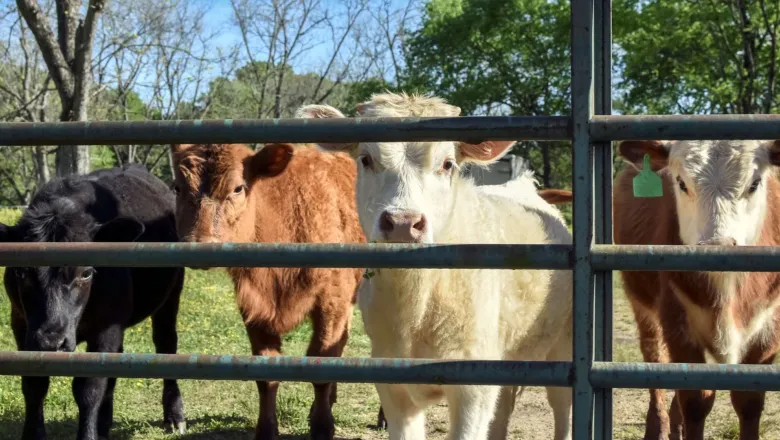
Stocker cattle are weaned calves, typically <12 months of age. The cattle have been weaned and are placed on grass, forage or a combination of supplemental feed to gain weight before they move to a feedlot or market. A stocker cattle operation is the cycle of buying lighter weight cattle, adding pounds and selling at a heavier weight. Profit comes from purchased prices vs. selling price, minus your cost of production.
Prefer a printable version? Download the Stocker Beef Production information sheet.
Why consider cow-calf production?
Beef stocker production is flexible and profitable when managed correctly. Stocker operations typically require smaller startup costs by purchasing lighter weight calves with faster returns within 12 months. Producers have flexibility in their herd sizes while offering land use to turn idle land, crop residue or seasonal pastures into economic weight gain.
What are the year-to-date pricing trends for stocker cattle?
Margins, particularly stocker cattle, have remained profitable over the last 2-3 years, bolstered by continual upward market trends headlined by a record low U.S. herd. Moving forward, expectations are prices will stabilize, as the herd cycle begins to reset with anticipated herd expansion. This may result in tighter margins for stocker operations moving forward.
What are some stocker cattle best management practices?
- Sourcing Cattle: Calves that have been properly weaned before purchase perform better. Documentation of vaccination records, castration status and strong body condition and uniformity are all optimal ways to ensure cattle are sourced efficiently.
- Proper Health Management: The first several weeks after cattle arrival is the highest risk period. Having a treatment protocol and receiving strategy is essential for successful operations. Receiving cattle in an efficient manner with low stress is ideal. Standard protocol includes vaccinations, deworming, implanting (if applicable) and individual identification. Ongoing monitoring and heath tracking can give strong data analytics to help profitability.
- Nutrition & Pasture Management: Aiming for average daily gains on grass is preferred. The key is balancing gain with input feed costs. Grazing management and ensuring pastures are strong in forage quality can help maintain nutritional values. Clean and accessible water and additional minerals should always be available.
- Risk Management: Stocker operations are susceptible to market risk. Engaging in risk management can help with profitability. This can range from forward pricing, Livestock Risk Protection (LRP) insurance and hedging strategies. A blended strategy approach often leads to more successful production.
- Cattle Sales: Most cattle are sold in the fall when pasture quality starts to decline, and feedlots are filling before winter. Some sales occur in the summer when supply is lower.The right timing depends on cost structure, forage availability and market direction.
What do the numbers look like for stocker cattle production?
- Cattle and calves on feed for the slaughter market in the United States for feedlots with capacity of 1,000 or more head totaled 11.1 million head on August 1, 2026. The inventory was 2 percent above August 1, 2025.
- The number of feeder and stocker cattle sold during the first 39 weeks of 2026 totaled 6.62 million, 2.2% below the number sold during the same period in 2025.
- During July 2026, placements of cattle and calves weighing less than 600 pounds were 310,000 head, 600-699 pounds were 215,000 head, 700-799 pounds were 320,000 head, 800-899 pounds were 322,000 head, 900-999 pounds were 185,000 head, and 1,000 pounds and greater were 70,000 head.
Sources
- https://extension.msstate.edu/publications/stocker-cattle-receiving-management
- https://bookstore.ksre.ksu.edu/pubs/stocker-and-backgrounding-cattle-management-and-nutrition_C723.PDF
- https://uknowledge.uky.edu/cgi/viewcontent.cgi?article=1153&context=ky_grazing
- https://southernagtoday.org/2025/04/15/2025-national-feeder-and-stocker-receipts-and-heifer-percentage/
- https://www.nass.usda.gov/Newsroom/2026/07-24-2026.php